50-minute guided boat trip
A guided boat trip through Ghent's medieval centre, with live commentary in Dutch, English and French. It passes Gravensteen, the belfry and St Bavo's Cathedral from the water.
See dates ↗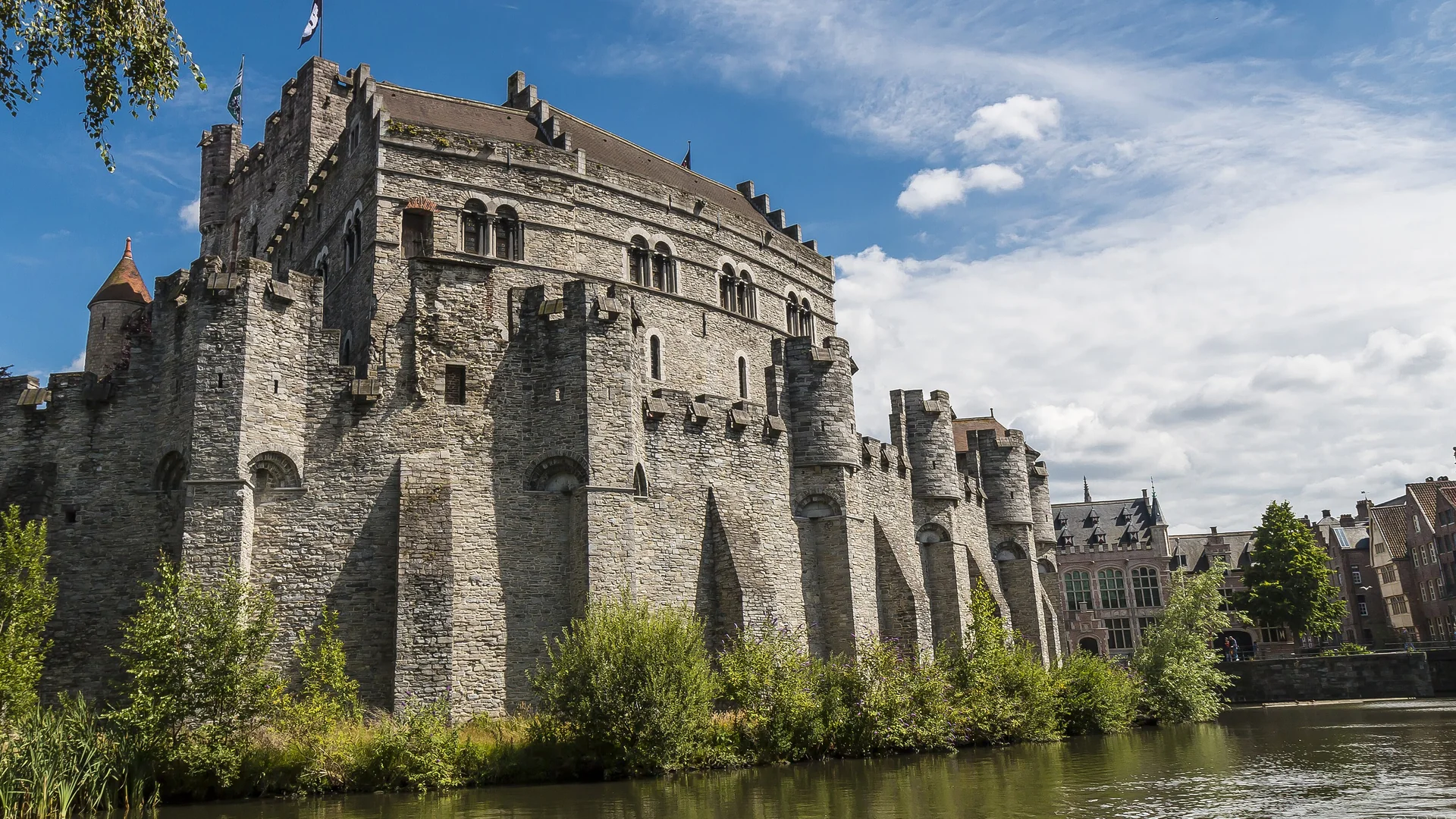
Sint-Veerleplein · Ghent
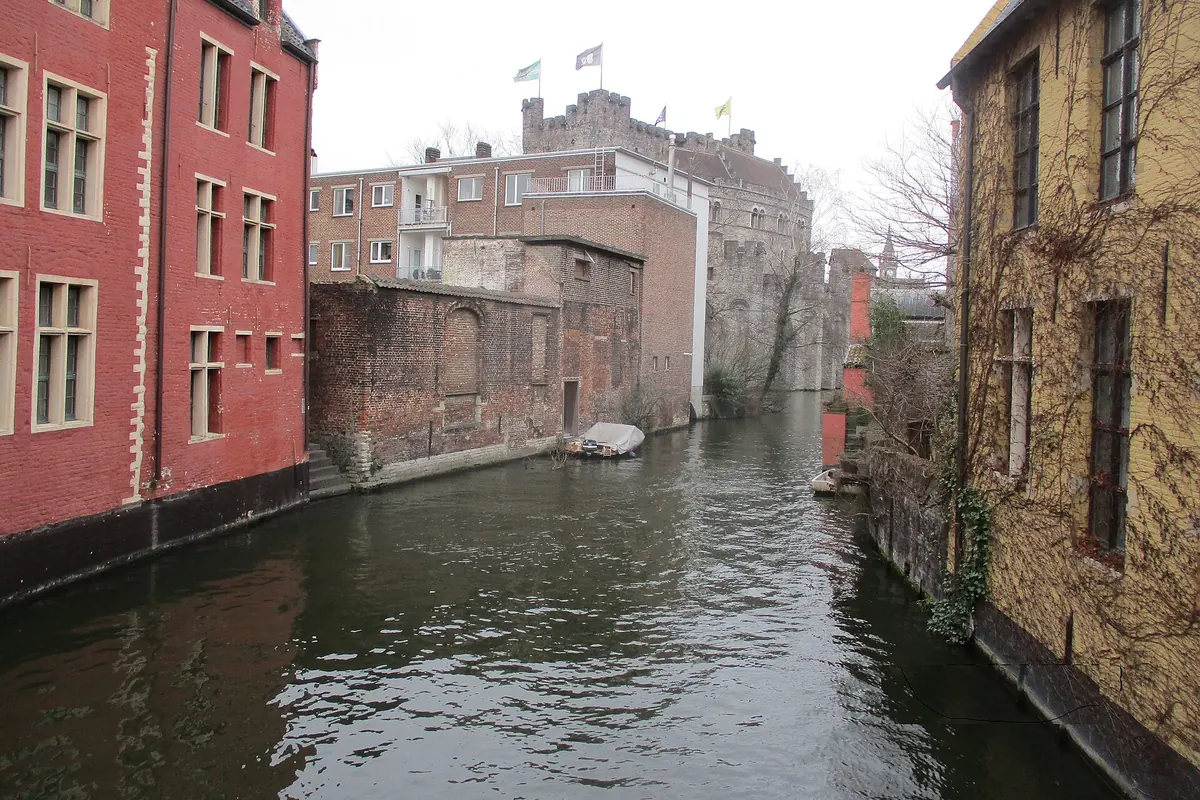
Philip of Alsace raised Gravensteen's stone walls in 1180, and they still tower over the Lieve canal.
Drift past at water level and you see what a rebellious city once had to look up at.
Why Gravensteen
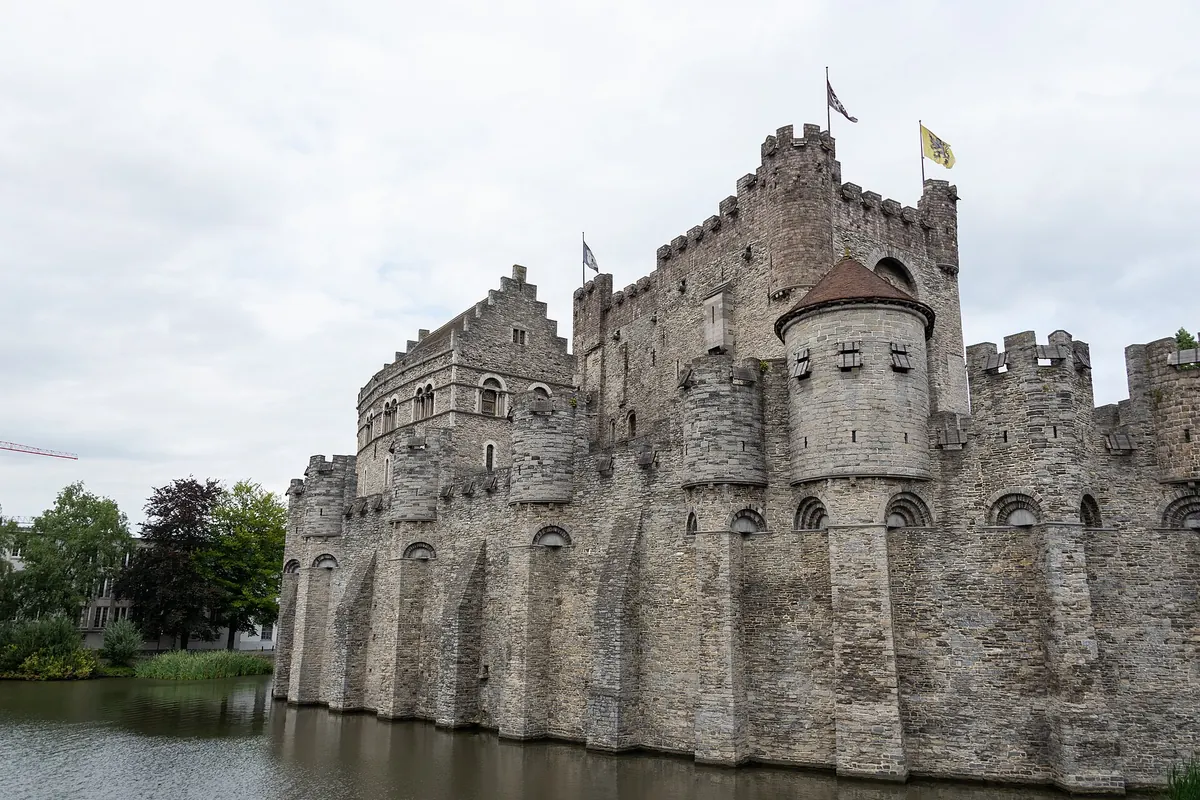
Gravensteen is a moated castle in the centre of Ghent. Philip of Alsace, Count of Flanders, had it built in 1180, and Wikipedia says it was meant to intimidate the burghers of Ghent as well as to protect. Behind an oval wall with 24 small turrets rises a keep about thirty metres high. The castle later served as a court, a prison, a mint and a cotton mill, and it has been open to visitors since 1907.
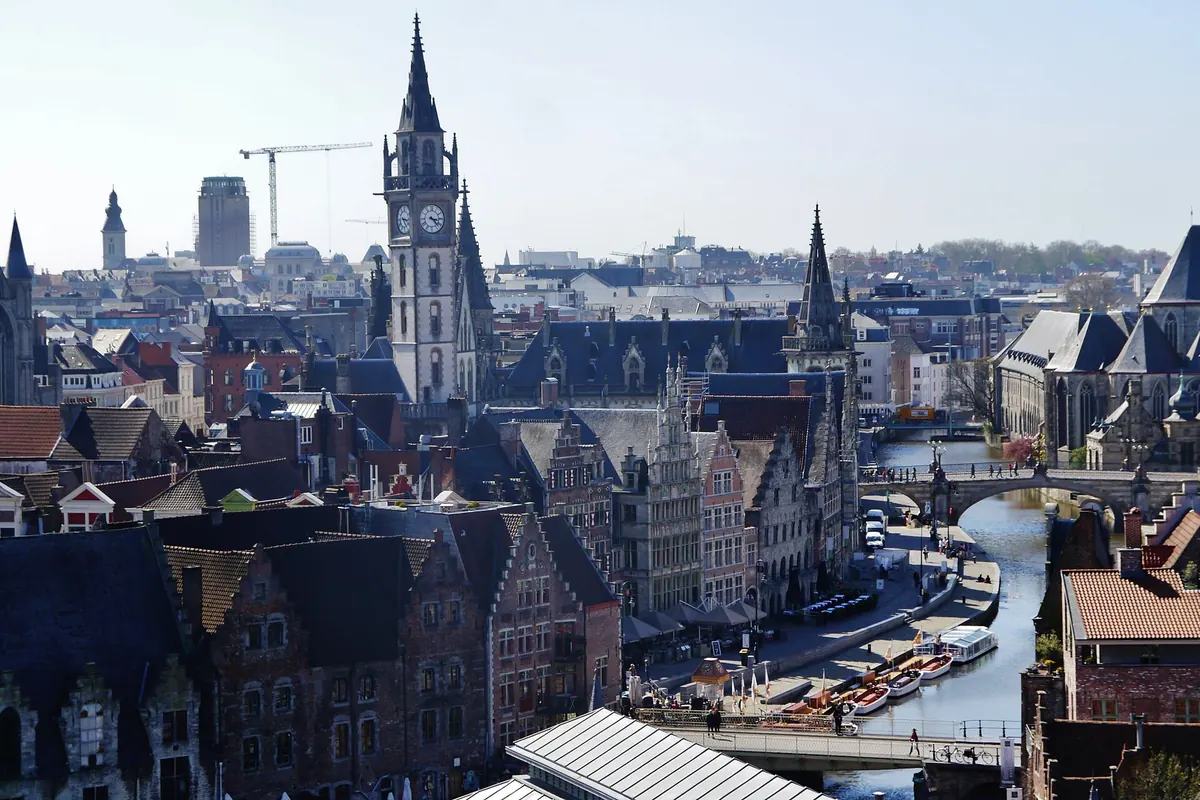
Dutch Wikipedia says the Lieve canal begins at the castle, and Wikipedia says the moat is fed with water from the Lys. A guided boat trip through the old port passes the walls, the belfry and the guild houses with live commentary, and it shows you the stone rising from the water.
The boat trips and the day tour on this page see Gravensteen from the outside. None of them includes entry to the castle. You buy castle entry from the castle's own website or at the gate. If you want to go inside, book that separately and use a boat trip as the other half of the day.
You can put the castle in a day in three ways. A 50-minute guided boat trip, a shorter 40-minute one, or a guided day tour from Brussels that covers Ghent and Bruges. The comparison below sets them beside castle entry.
Five parts of the castle
These are the parts the castle shows visitors, drawn from the castle's own website and reference sources. The weapons and justice collections sit among them.
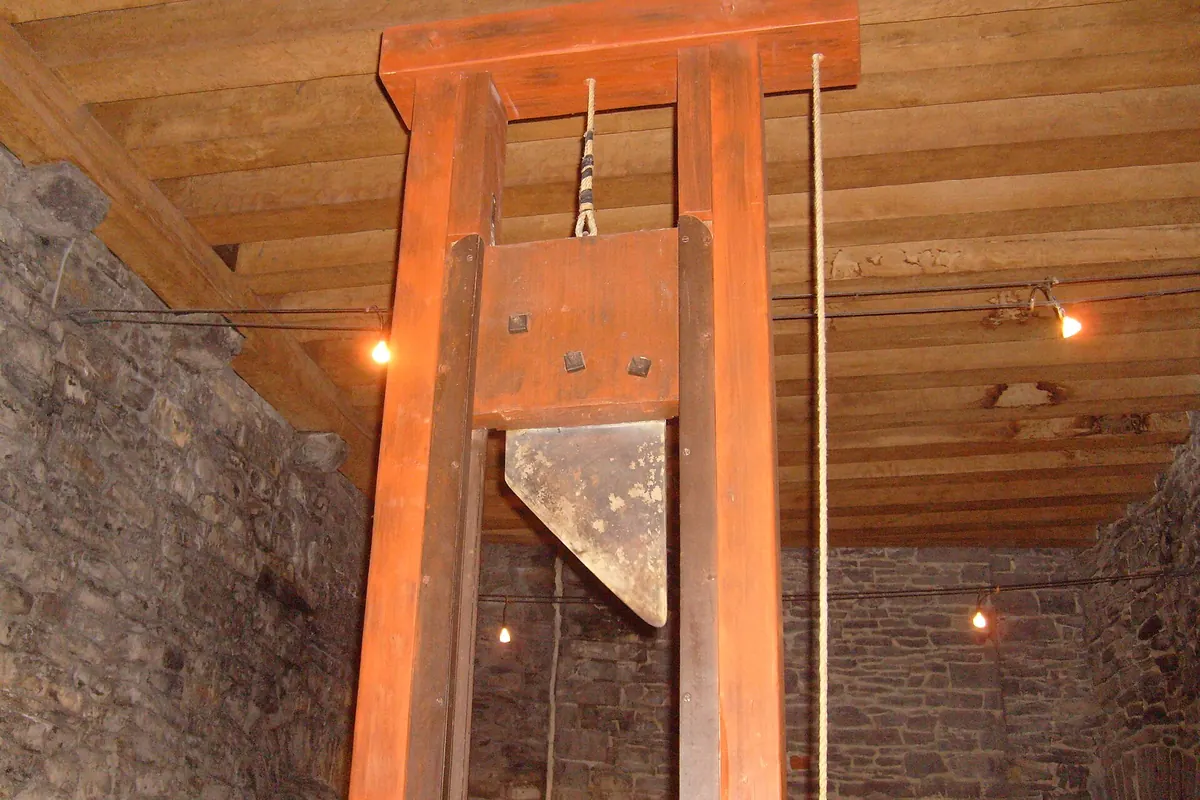
Which parts are open, and when, is for the castle's own website to say. Castle entry is sold by the castle, not through this site.
Moat and gatehouse
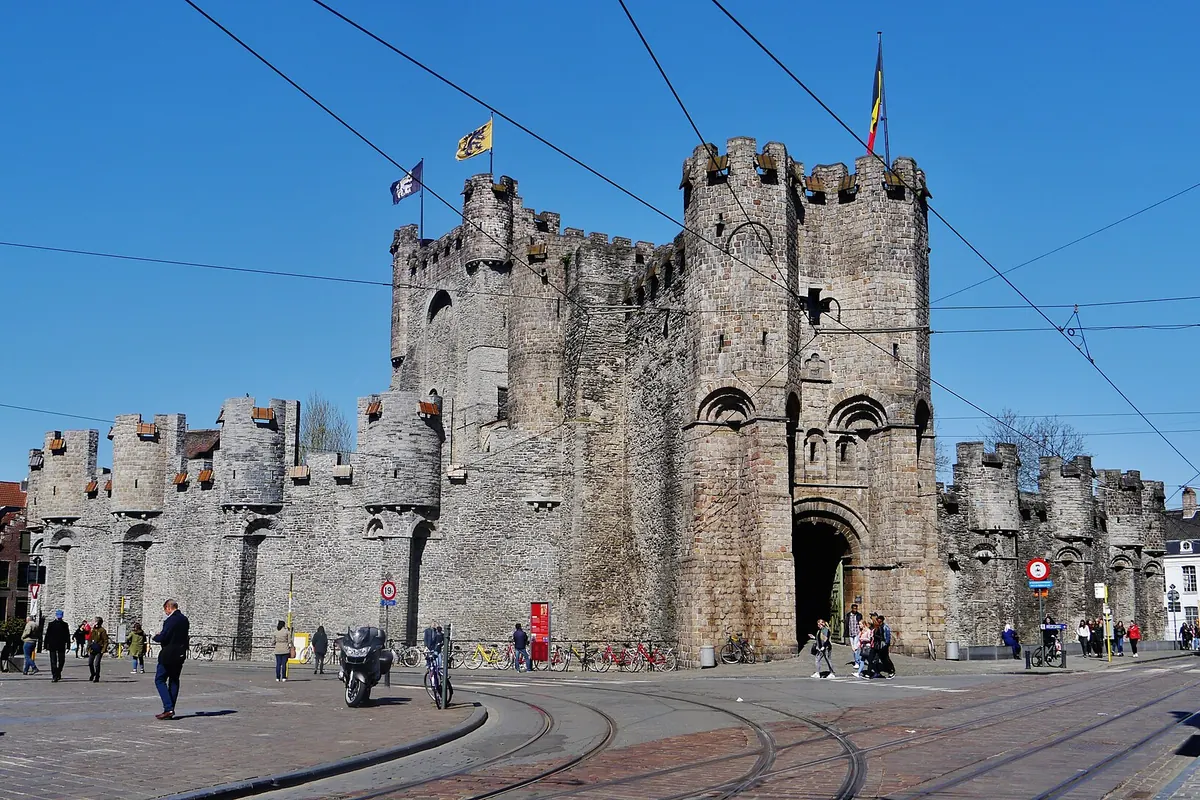
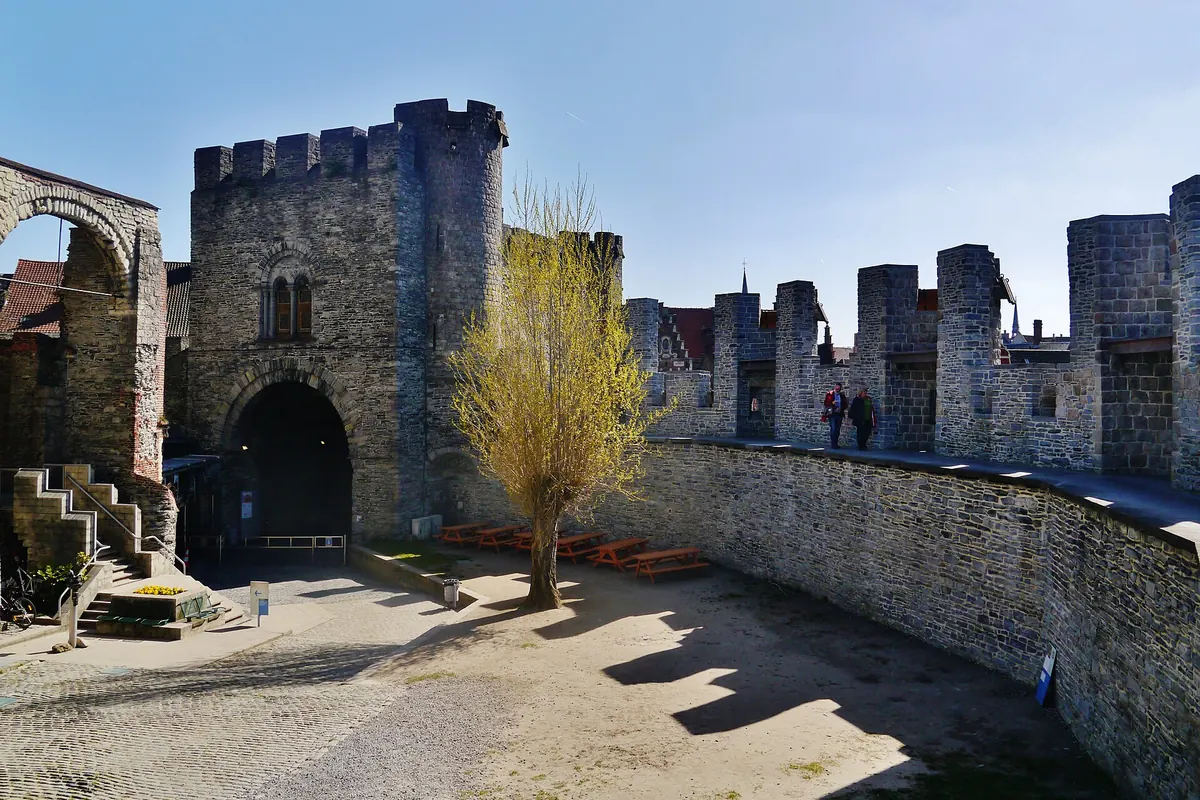
Philip had the moat raised and extended, and the gatehouse still carries the inscription of 1180 that names him. It once divided the inner yard from the outer one, now the Sint-Veerleplein. Dutch Wikipedia says the moat has been two-thirds full of water again since June 2016.
Keep
According to the castle's history page, Philip turned the central building into a tower about thirty metres high. Wikipedia calls it a large central donjon. Dutch Wikipedia adds that a cotton mill occupied the keep from 1807.
Counts' residence
Wikipedia calls the castle the residence of the counts of Flanders until 1353. The castle's own history page says the household stayed only when it was in Ghent, and that the castle was mainly the county's administrative centre and a law court.
Justice and arms
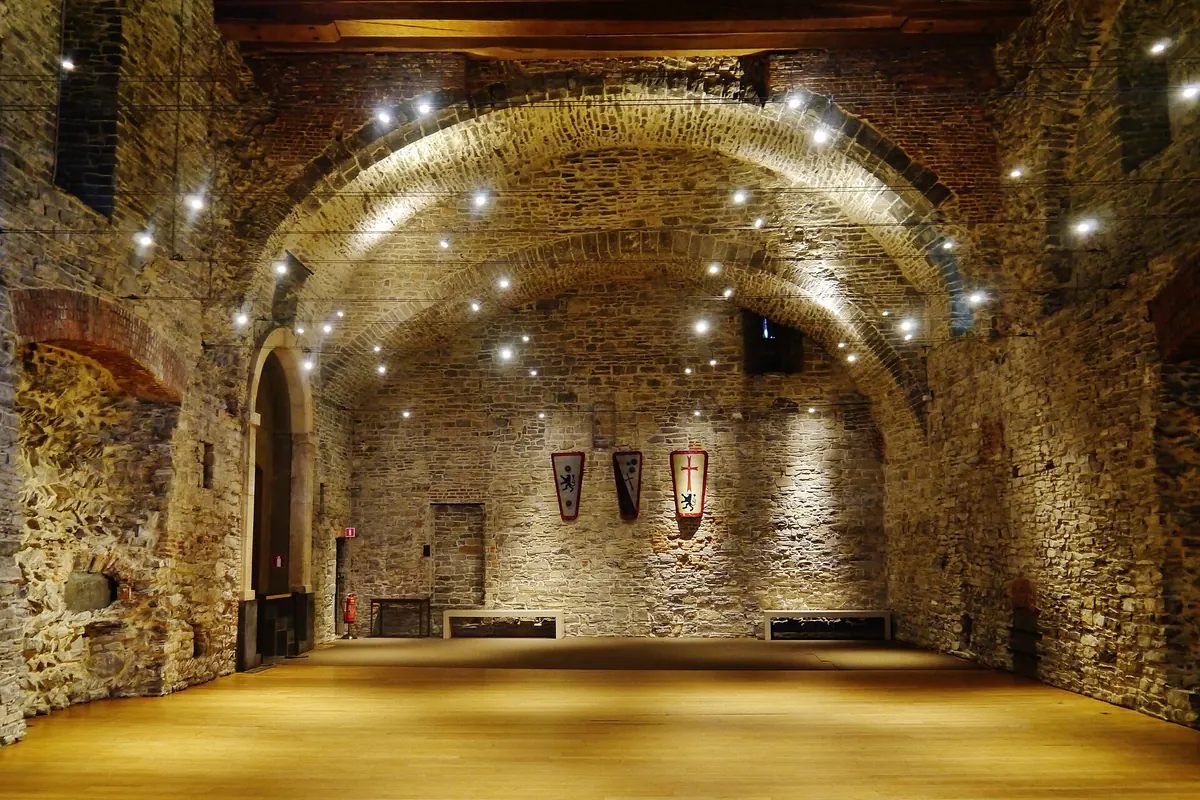
Dutch Wikipedia says the castle holds a historic weapons collection, gathered mainly by the nineteenth-century industrialist Adolphe Neyt, with judicial objects and instruments of torture. They recall the high court of Flanders that sat here from the fourteenth to the eighteenth century.
Ramparts
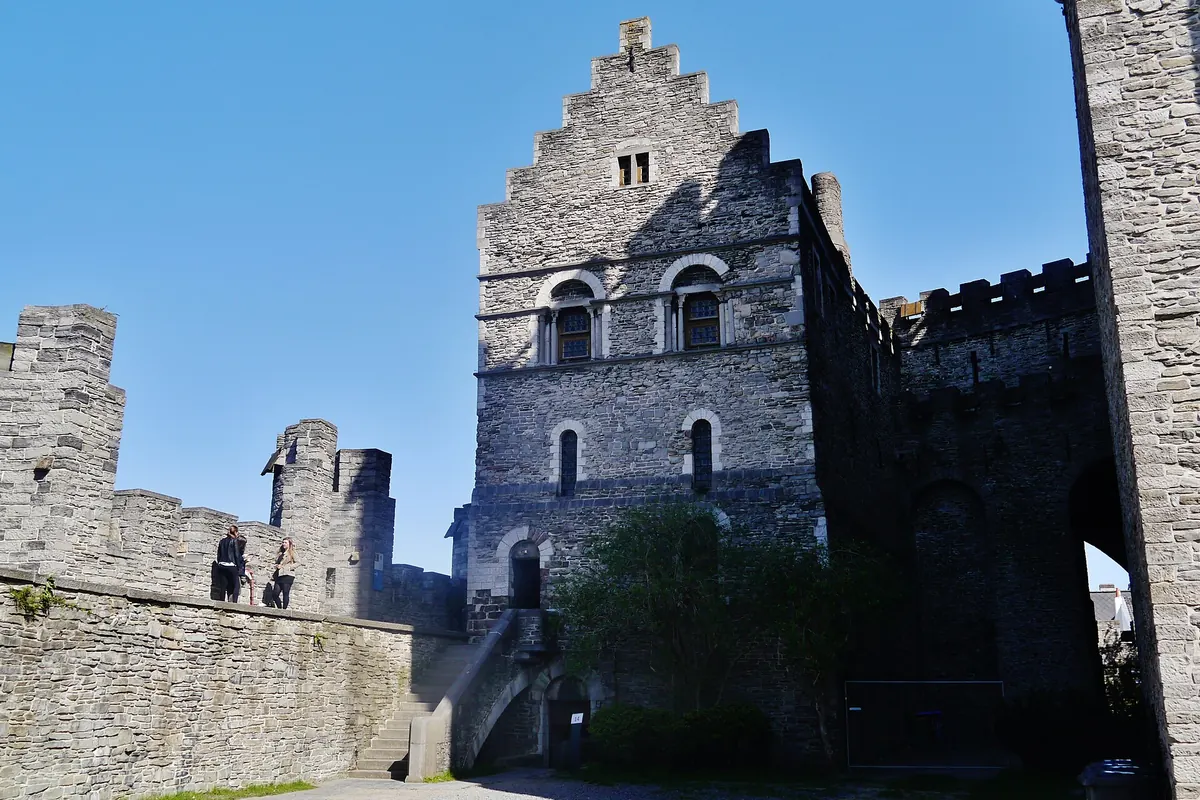
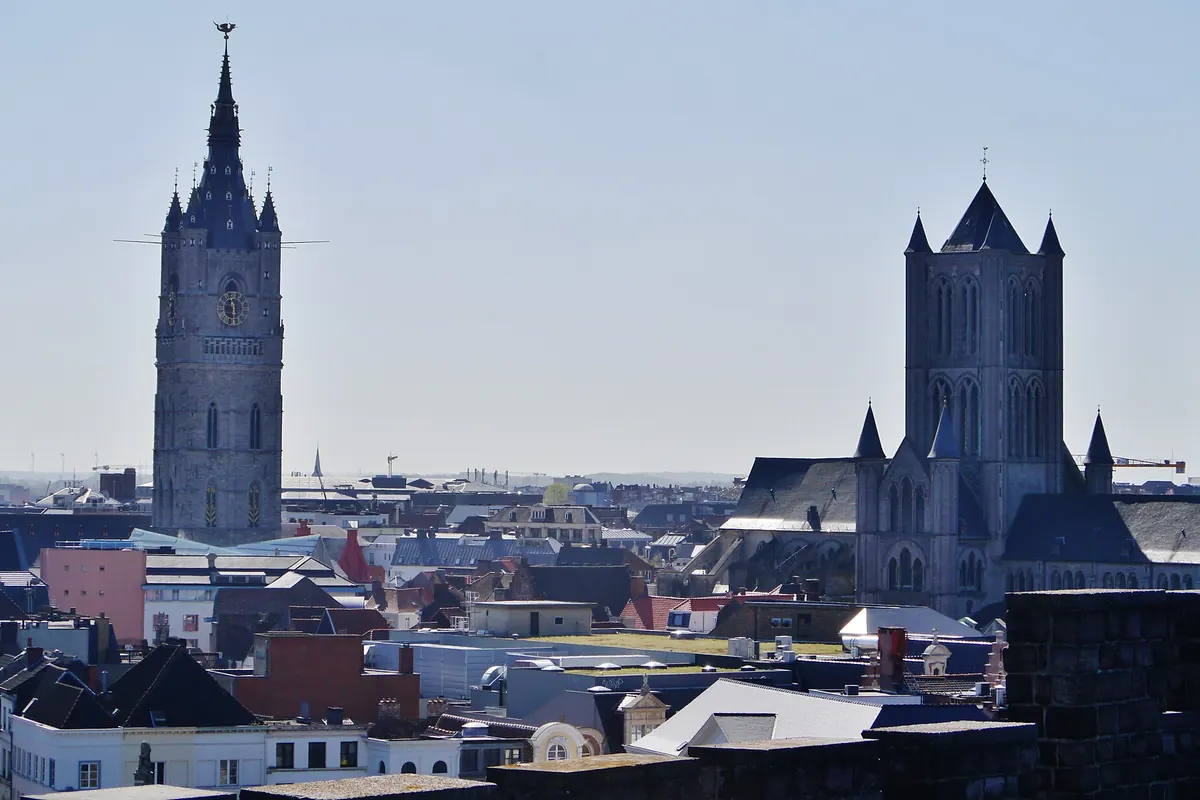
The castle describes real battlements and narrow tower stairs. From the wall you look over the roofs of the old centre to the belfry and St Nicholas' Church, two of the three medieval towers that Wikipedia says overlook the city.
The castle in four facts
Four facts about the stone itself, drawn from the castle's own website and reference sources.
Gravensteen in pictures
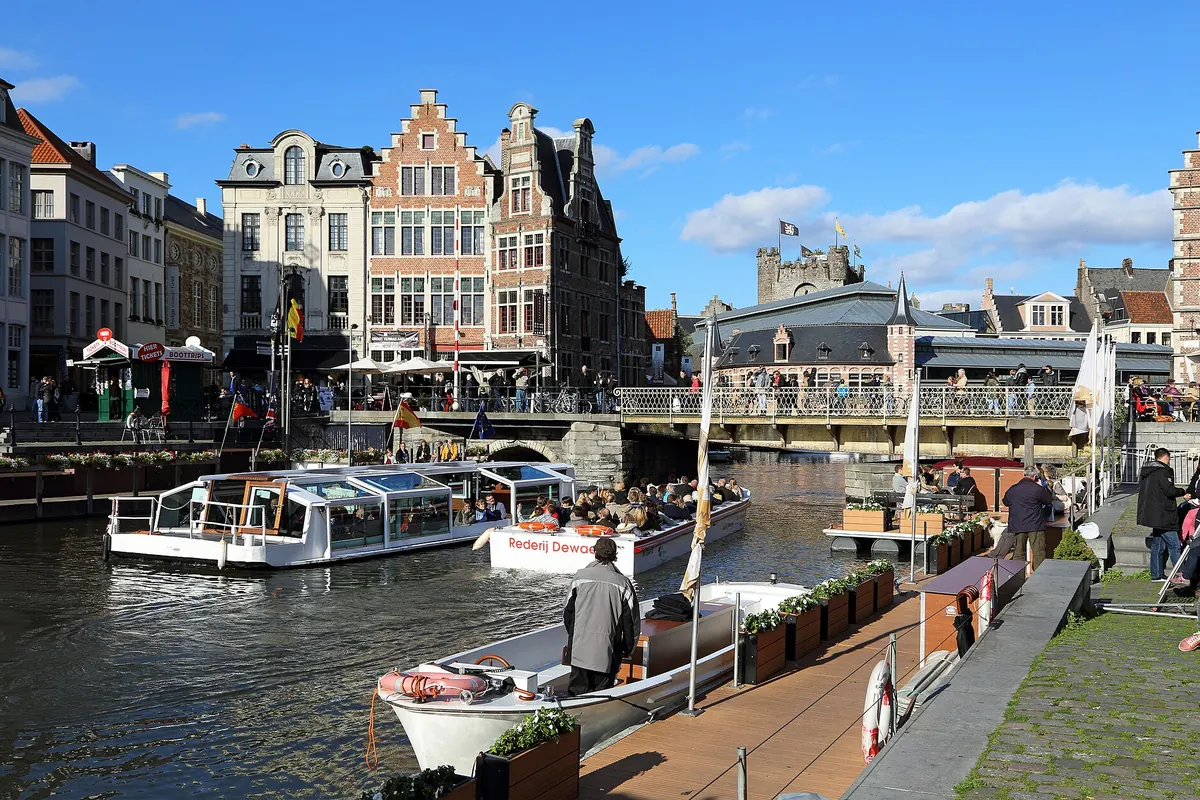
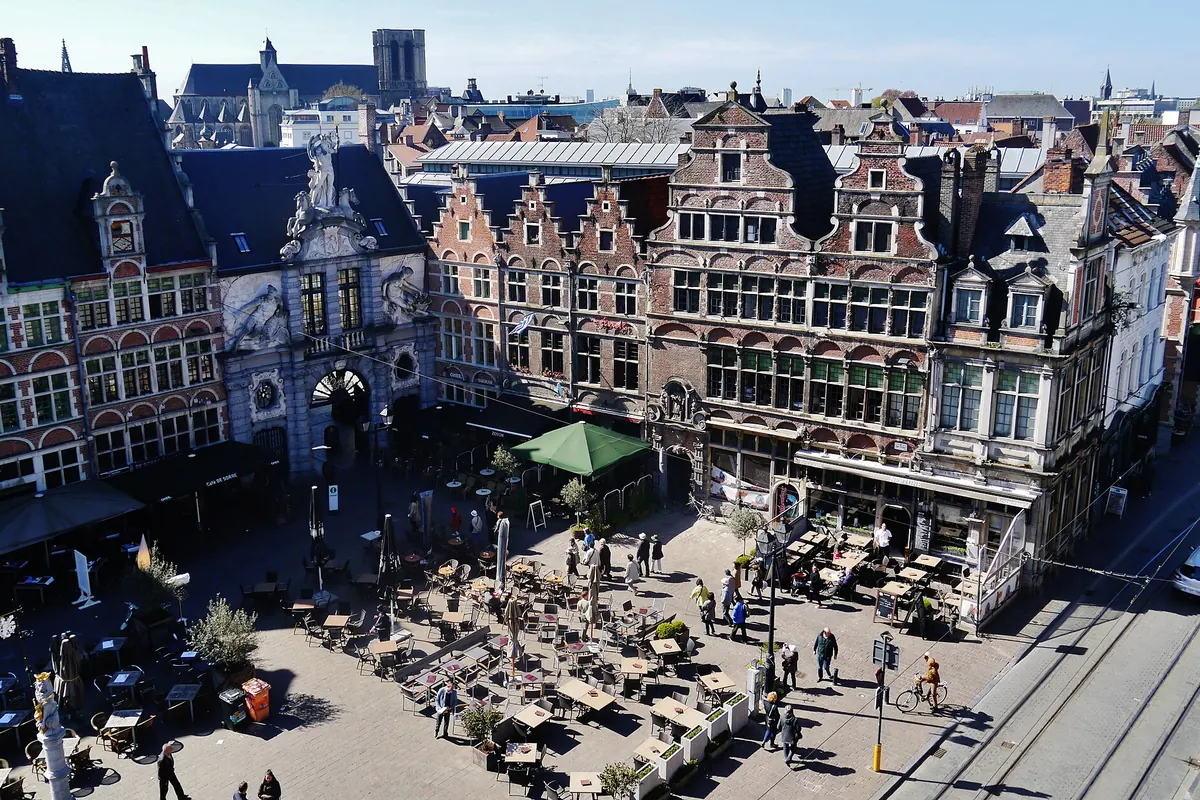
The gatehouse and the moat, the rooms and the wall, and the quays and canals that lead to the castle.
Boat, day tour and castle entry
| Option | What it is | Best for |
|---|---|---|
| 50-minute guided boat trip | A guided boat trip through Ghent's medieval centre, with live commentary in Dutch, English and French. It passes Gravensteen, the belfry and St Bavo's Cathedral from the water. | Seeing the castle's walls from the water and hearing the city's story in under an hour. |
| 40-minute guided boat trip | A shorter guided trip along the Leie from the Korenlei quay, with the same three live languages. It passes the castle and the old guild houses. | Visitors short of time who still want the castle from the water. |
| Bruges and Ghent day tour from Brussels | A guided day tour of about ten and a half hours, with a walk in Ghent past the Castle of the Counts and time in Bruges. It starts near Brussels Central Station. | Visitors based in Brussels who want both cities in one day. |
| Castle entry (not sold here) | Sold by the castle itself, on its own website or at the gate. It is not included in any trip above. | Anyone who wants to go inside, climb the stairs and walk the ramparts. |
Boat trips and a day tour
These are two guided boat trips and a day tour from Brussels. Each sees Gravensteen from the outside. None of them includes entry to the castle, which the castle sells itself. More Ghent bookings sit beneath them.
A guided boat trip through Ghent's medieval centre, with live commentary in Dutch, English and French. It passes Gravensteen, the belfry and St Bavo's Cathedral from the water.
See dates ↗A shorter guided trip along the Leie from the Korenlei quay, with the same three live languages. It passes the castle and the old guild houses.
See dates ↗A guided day tour of about ten and a half hours, with a walk in Ghent past the Castle of the Counts and time in Bruges. It starts near Brussels Central Station.
See dates ↗More to book in Ghent
Plan the visit
No trip on this page includes castle entry. The castle is run by Historische Huizen Gent and sells entry on its own website and at the gate. Its site advises booking online in advance. Opening hours, prices and closing days are the castle's to state, so check its website for the current ones.
Gravensteen stands on the Sint-Veerleplein in the centre of Ghent, which is largely car-free. Gent-Sint-Pieters is the main international station, and trams run from there to the centre. The last stretch to the castle is on foot.
The 40-minute trip starts on the Korenlei quay, across the Leie from the Graslei. The 50-minute trip has two starting points to choose from. The ticket is valid for one trip at a time you choose.
The boat trips take 50 and 40 minutes. The castle suggests about an hour and a half for its full audio guide and about an hour for its shorter tour.
The 50-minute trip goes ahead rain or shine, with umbrellas on board, and winter trips carry blankets. Wikipedia describes adequate rainfall year-round in Ghent, so pack a light waterproof in any season.
The castle describes narrow tower stairs and steep spiral staircases, and offers a quest for ages three to eight and an audio guide for ages eight and up. On the 50-minute boat trip pets are not allowed, though assistance dogs are.
Guides to Gravensteen
Getting there Train, tram, bike or on foot: how to reach Gravensteen in the car-free centre of Ghent, and where the boat trips fit in beside the castle walls.
Read the guide → When to go Which season, weather and day suit Gravensteen in Ghent: the boat timetable, rain plans, festival crowds and how to fit castle and canal into one day.
Read the guide →FAQ
From the castle's own website or at the gate. The castle is run by Historische Huizen Gent. No boat trip or tour on this page includes castle entry.
No. Both boat trips pass the castle from the water, with a live guide, and show you the walls and other waterside landmarks. They do not include entry to the castle.
The tour walks past the Castle of the Counts in Ghent. It is not a castle visit, and entry to the castle is not part of it. Buy a castle ticket separately if you want to go inside.
The castle's own site describes narrow tower stairs, high rooms and real battlements, with an audio guide included. Wikipedia lists it among Ghent's highlights. It suits visitors who like climbing and castle history.
The castle suggests about an hour and a half with its full audio guide and about an hour with the shorter tour. The boat trips take 50 and 40 minutes.
By train to Gent-Sint-Pieters, then a tram into the centre, which is largely car-free. Cycling and walking also work well in the old centre.
The castle offers a quest for ages three to eight and an audio guide for ages eight and up, and its stairs are narrow and steep. It also covers justice and torture, so judge what suits your child.
Philip of Alsace, Count of Flanders, built it in 1180 on the site of older fortifications. It later served as a court, a prison, a mint and a cotton mill.
No. This is an independent guide, not the castle's or its operator's website, and it is not affiliated with either. Castle entry is sold by the castle. Boat trips and tours booked from this page are with GetYourGuide.
Every price here is per person, shown in US dollars. GetYourGuide converts it to your currency at checkout.