When to go
Best time to visit Gravensteen
Which season, weather and day suit Gravensteen in Ghent: the boat timetable, rain plans, festival crowds and how to fit castle and canal into one day.
Book the boat trip ↗Quick answer
There is no wrong month for Gravensteen. The castle is open every day, and Ghent's weather is mild but wet all year, so plan for rain rather than waiting for a dry spell. April to October brings the fullest boat timetable on the canals. Winter trims it, and the boats then carry blankets. Festival days fill the centre, so book ahead if you go then.
Ghent's weather in one paragraph
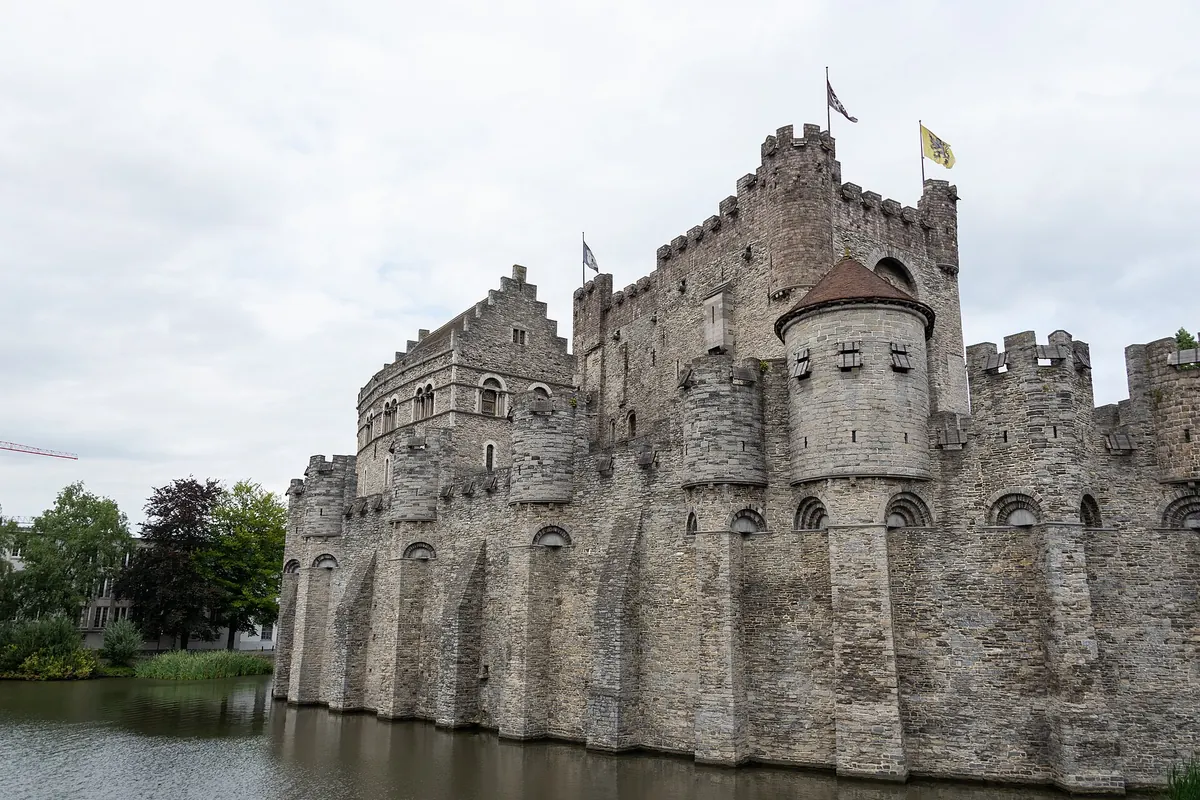
Wikipedia gives Ghent a marine west coast climate, with mild differences between highs and lows and adequate rainfall year-round. The same page describes the city as a place where much of the medieval architecture is remarkably well preserved, which is what you came to see, and that does not depend on the weather. In practice that means there is no dry season to wait for. Any month can bring a wet day, and any month can bring a bright one. Build your visit around the things you can control: how much of it is indoors, which timetable the boats run, and whether you booked the castle ahead. A light waterproof layer is the single most useful thing to pack in every season.
Spring to autumn: the fullest boat timetable
The 50-minute boat trip runs a seasonal timetable. From the start of April to the end of October it sails every day, with departures through the daytime and the shortest gaps between boats. That is the easiest period to turn up and fit a trip into your plans. The 40-minute boat trip is a shorter alternative if your time is tight, and it also gives live commentary in three languages. The ticket is valid for one trip at a time of your choosing, so you do not have to commit to an hour in advance. Open the booking calendar to see the start options on the day you choose.
Late autumn and winter: a shorter timetable
From the start of November to the end of March the same boat trip runs a reduced timetable, with fewer departures and a shorter day. Blankets are provided on the winter tours. The trip still goes ahead rain or shine, and umbrellas are kept on board for wet weather. Winter suits visitors who prefer a quieter city, but the daylight is short, so plan the boat for the brighter part of the day and the castle for whatever light remains. The castle is a stone fortress with tower stairs and open battlements, so dress in layers and plan a warm stop afterwards.
Rain: what changes at the castle
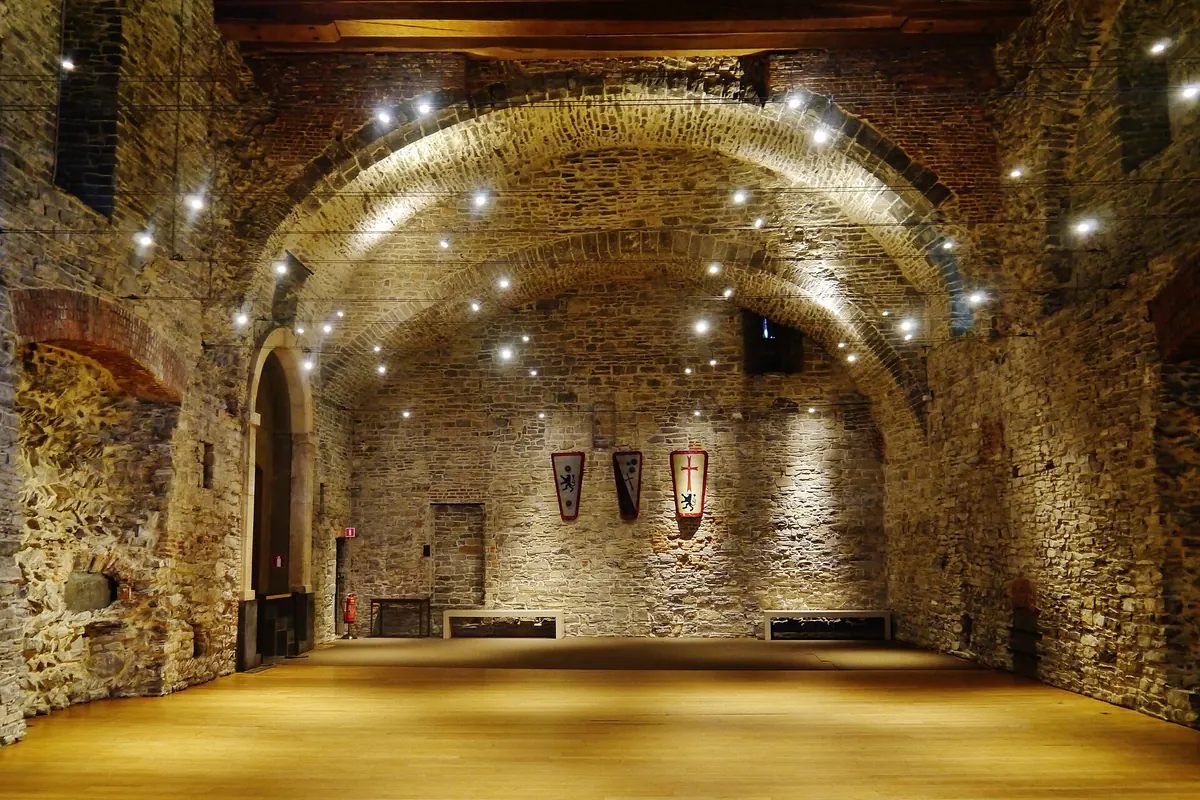
The castle's own site describes narrow tower stairs, high rooms and real battlements. That mix makes a wet day manageable. The rooms and stairs are under cover, and the audio guide, which is included with entry, takes about an hour and a half on the longer tour. The battlements are open to the weather, so wind and rain reach you there. On a wet day, spend your time in the rooms with the audio guide and keep the wall walk short. If the weather clears while you are inside, the ramparts are the part to save for last, because the view over the old town is the reward for the climb.
Festival days
The Ghent Festival is a ten-day annual event. The whole centre fills during it, and the quays and streets around the castle are among the busiest places. The city also hosts a free open-air festival of light art. If your dates overlap a festival, expect crowds, book the castle and any boat trip ahead, and check the festival's own site for the current dates, which vary from year to year. Outside festival days the centre is easier to move through, though no source ranks the quiet days for you.
Choosing the hour
No source gives a quiet hour at the castle, so be wary of anyone who claims one. What you can control is the flexible part of the day. The boat ticket is valid for one trip at a time you choose, which lets you look at the sky over breakfast and pick an hour that suits the weather. The castle is the opposite: its website advises booking online in advance, so book that first and fit the boat around it rather than the other way round.
After the castle: the quays
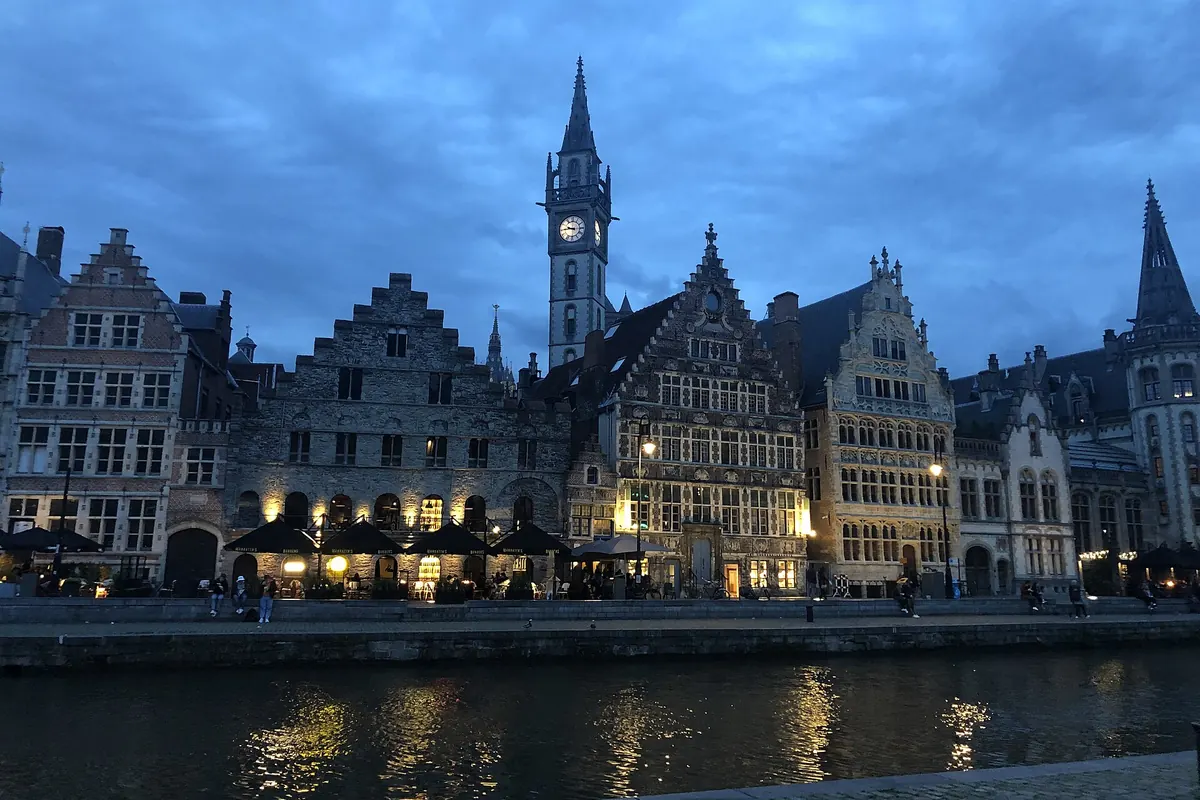
Wikipedia calls Graslei and Korenlei, the medieval port quays, a cultural and tourist hotspot with a high concentration of café patios. They are a natural place to finish a day at the castle, with the old guild houses along one bank and the water in front. In good weather the terraces fill, and the same boats that pass the castle tie up along the water. In poor weather the quays are quieter, and the interiors nearby make a better stop. Whichever weather you get, the quays are free to walk, and the view of the guild houses across the water costs nothing.
Fitting castle and canal into one day
A sensible plan is the castle first, at a slot you booked ahead, then a boat trip in the afternoon, when you have seen the walls close up and want the water-level view. The boat trip lasts 50 minutes and the 40-minute alternative is shorter still. The castle's audio guide runs for about an hour or an hour and a half, depending on which tour you choose. Between them you have most of a day, with time for a meal on the quays. If you are travelling with children, put the castle in the morning and the boat after lunch, because a seat on the water is an easy way to rest legs that have just climbed tower stairs.
A day trip from Brussels
If you come on the guided day tour from Brussels, the day length is fixed at about ten and a half hours, and the Ghent part of it is a guided walk followed by free time. You cannot choose your hour, so choose your day by the forecast. The tour passes the Castle of the Counts but does not include entry, so add a separate castle ticket if you want to go inside, and check that your free time leaves room for it. Because the day tour starts and ends in Brussels and covers Bruges as well, a castle visit of an hour and a half is realistic only if you skip most of the free time in Ghent.
Who this isn't for
If you need a guaranteed dry day, Ghent cannot offer one in any month. The boat trips go ahead in the rain, and a wet cruise is not for everyone. If you would rather not be on open water in bad weather, choose the castle's rooms and a café on the quays instead. And if you want the one quiet hour, there is no sourced answer: book the castle ahead, pick the boat by the sky and accept the crowd. For most visitors the real choice is not between months but between a booked castle slot and a plan for wet weather.
Frequently asked questions
Is Gravensteen open all year?
The castle's website says it is open every day. Check the castle's own site for opening arrangements and any closing dates before you travel.
Do the boat trips run in winter?
Yes, on a reduced timetable from the start of November to the end of March, with blankets on the winter tours. The trip goes ahead rain or shine, and umbrellas are on board.
What is the best month for good weather?
No month is reliably dry. Wikipedia describes adequate rainfall year-round in Ghent, so plan for rain in any season and pack a light waterproof.
Should I book the castle ahead?
The castle's own website advises booking online in advance. Do that first, then fit a boat trip around your slot, because the boat ticket is valid for one trip at a time you choose.
Is the Ghent Festival a good time to visit?
It is lively but crowded. Wikipedia describes about one to one and a half million visitors over ten days. Book ahead and expect the streets around the castle to be busy.
Sources