Highlights
What to see at Gravensteen
The gatehouse, ramparts, keep and collections at Gravensteen in Ghent, plus the views and the old port quays you can enjoy without a ticket.
Book the boat trip ↗Quick answer
Dutch Wikipedia lists five parts of the castle open to visitors: the gatehouse, the wall, the keep, the counts' residence and the stables. Add the weapons and justice collections, the views over Ghent's three medieval towers from the wall, and the moat and canal outside. You can see the walls from the square or from a boat without a ticket.
The gatehouse and its inscription
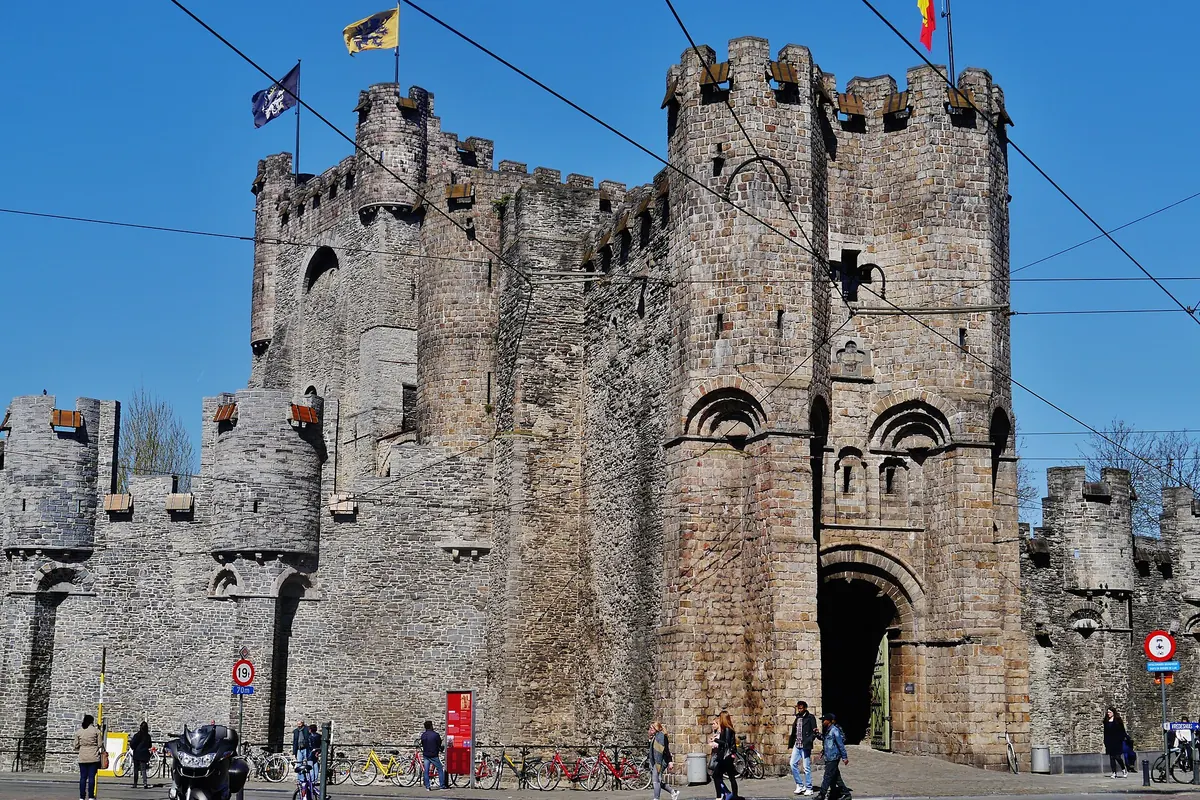
The gatehouse is where a visit begins, and the castle's history page says it still carries the inscription from 1180 naming Philip, Count of Flanders and of Vermandois, as the builder. The same page says the gatehouse once separated the inner bailey from the outer one, which is now the Sint-Veerleplein. Stand in the square first and look up at it, because the approach shows how the castle was meant to be seen.
The wall and the ramparts

The wall encloses an oval yard and carries 24 small turrets, according to the castle's history page. The castle describes its battlements as real, and you can walk them. From the wall you look over the roofs of the old centre, with the belfry and St Nicholas' Church standing clear of the skyline. Wikipedia names the belfry, St Bavo's Cathedral and St Nicholas' Church as the three medieval towers that overlook Ghent's centre.
The keep
The central building became a tower about thirty metres high under Philip of Alsace, the castle's history page says. Dutch Wikipedia adds that a cotton mill was housed in the keep from 1807. The keep is the part of the castle that reads best from the water, where its stone walls rise straight from the moat.
The counts' residence
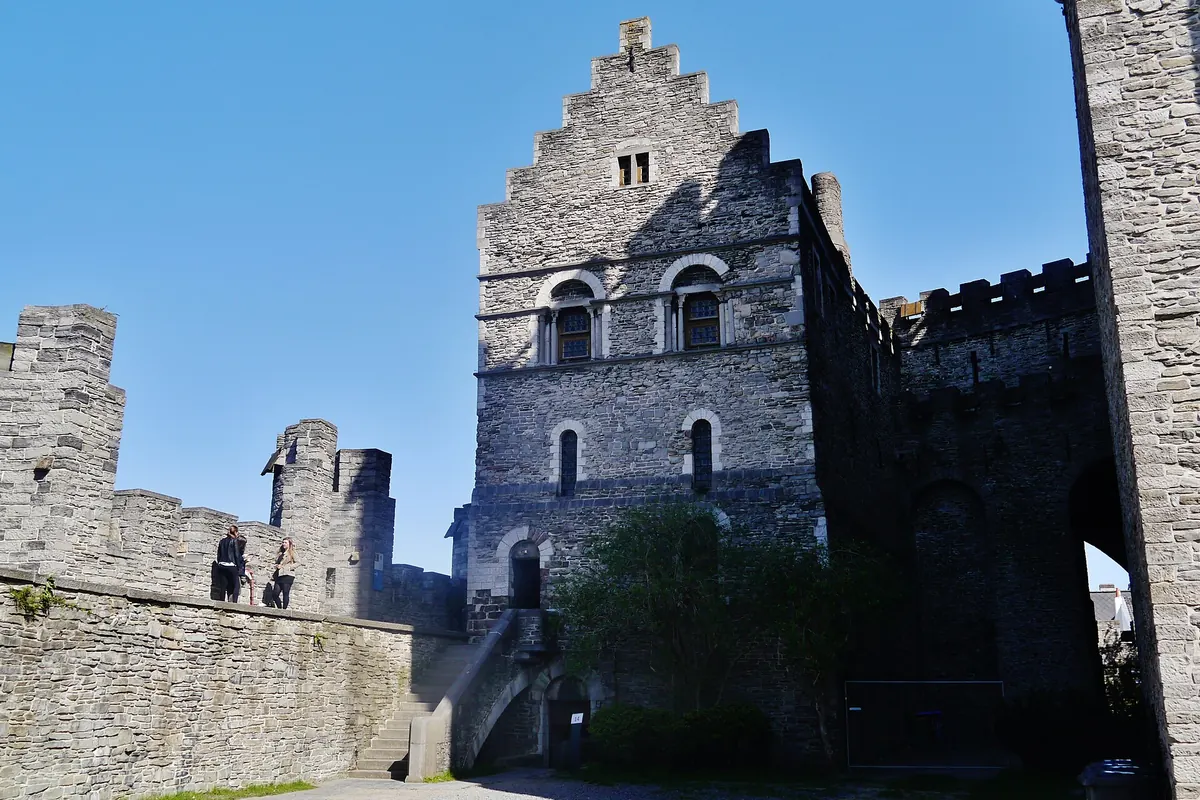
The stepped-gable building in the yard is the residence of the counts. Wikipedia says the castle incorporates a large central donjon, a residence and various smaller buildings. The castle's own history page is careful to say the counts stayed only when their household was in Ghent. The castle's own pages mention high rooms, and the building makes more sense once you know it was an office and a court as much as a home.
Weapons and justice
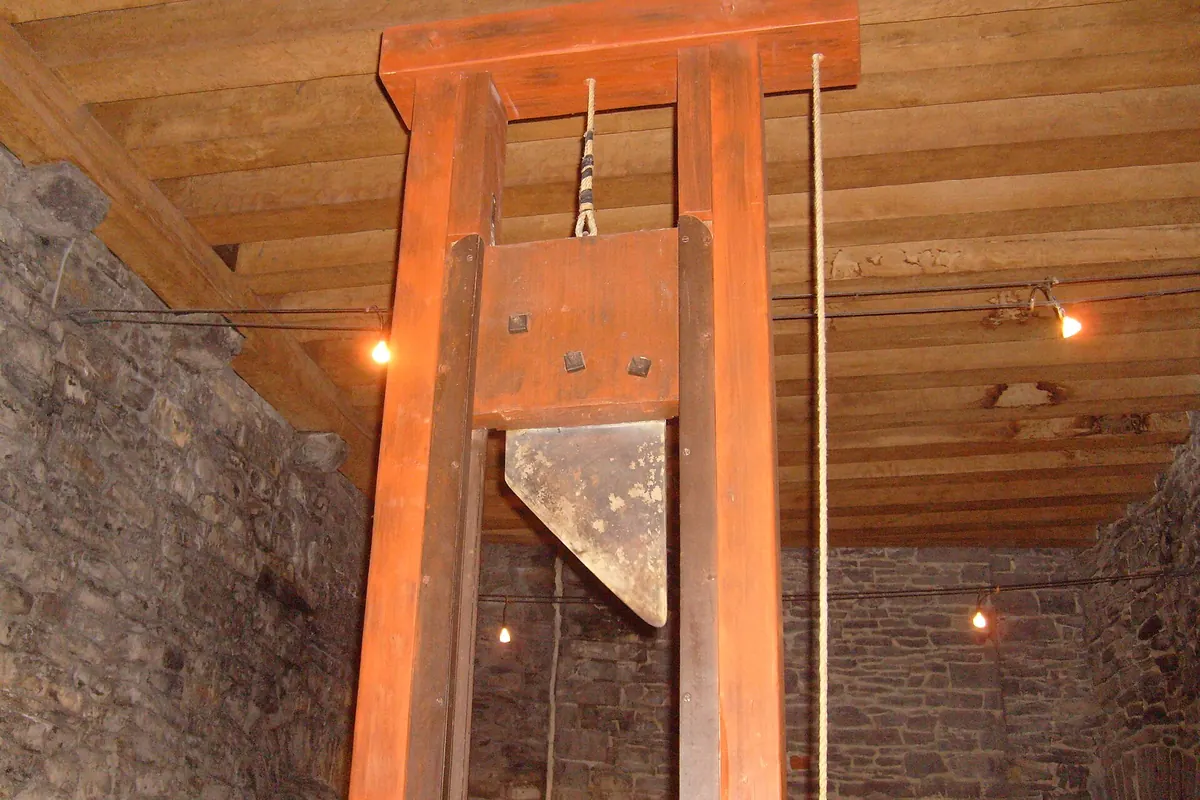
Dutch Wikipedia says the castle holds a historic weapons collection, mainly assembled by the nineteenth-century industrialist Adolphe Neyt, and a number of judicial objects and instruments of torture. It links these to the fact that the highest court of the county of Flanders sat here from the fourteenth to the eighteenth century. The castle's history page describes the dungeons as the most feared part of a prison that was damp, draughty and cold. This is the sober side of the visit.
Outside the walls
Some of the best views are free. Stand on the Sint-Veerleplein for the gatehouse, or find the canal bank for the walls above the water. Dutch Wikipedia says the Lieve canal begins at the Gravensteen. The Graslei and Korenlei quays, the old harbour with its guild houses, are within the same historic core, and St Bavo's Cathedral houses the Ghent Altarpiece, which Wikipedia names among the highlights of the city.
From the water
Both boat trips on this page pass the castle from the water, with a live guide in Dutch, English and French. The 50-minute trip also passes the belfry, St Bavo's Cathedral, St Nicholas' Church, the Old Fish Market, the Great Butchers' Hall and the Prinsenhof, where Charles V was born. A boat is a good first look before you decide whether to buy a castle ticket. It does not include entry to the castle, which is sold by the castle itself.
Who this isn't for
A visit to the castle is not suited to everyone. The stairs are narrow and steep, parts of the visit are on open battlements, and the collections include instruments of justice and torture. If any of that rules out a visit, the walls, the moat and the quays can still fill an hour without a ticket, and a boat gives the view of the castle that the interior cannot.
Frequently asked questions
What parts of Gravensteen can I visit?
Dutch Wikipedia lists the gatehouse, the wall, the keep, the counts' residence and the stables as open to visitors, along with collections of weapons and judicial objects.
Can I see Gravensteen without a ticket?
You can see the walls from the Sint-Veerleplein, from the canal bank and from a boat. Going inside needs a ticket from the castle's own website or at the gate.
What else is near the castle?
The Graslei and Korenlei quays, the belfry and St Bavo's Cathedral with the Ghent Altarpiece are all part of Ghent's historic core, according to Wikipedia.
Sources